The Job Details page had outgrown its framework. Every new feature was added to it, so the page became cluttered and dated, and people spent too long finding what mattered.
We set out to reimagine it for clarity and for the future: a simpler framework with less noise, able to adapt to different jobs and support AI-powered workflows.
All the data, none of the focus
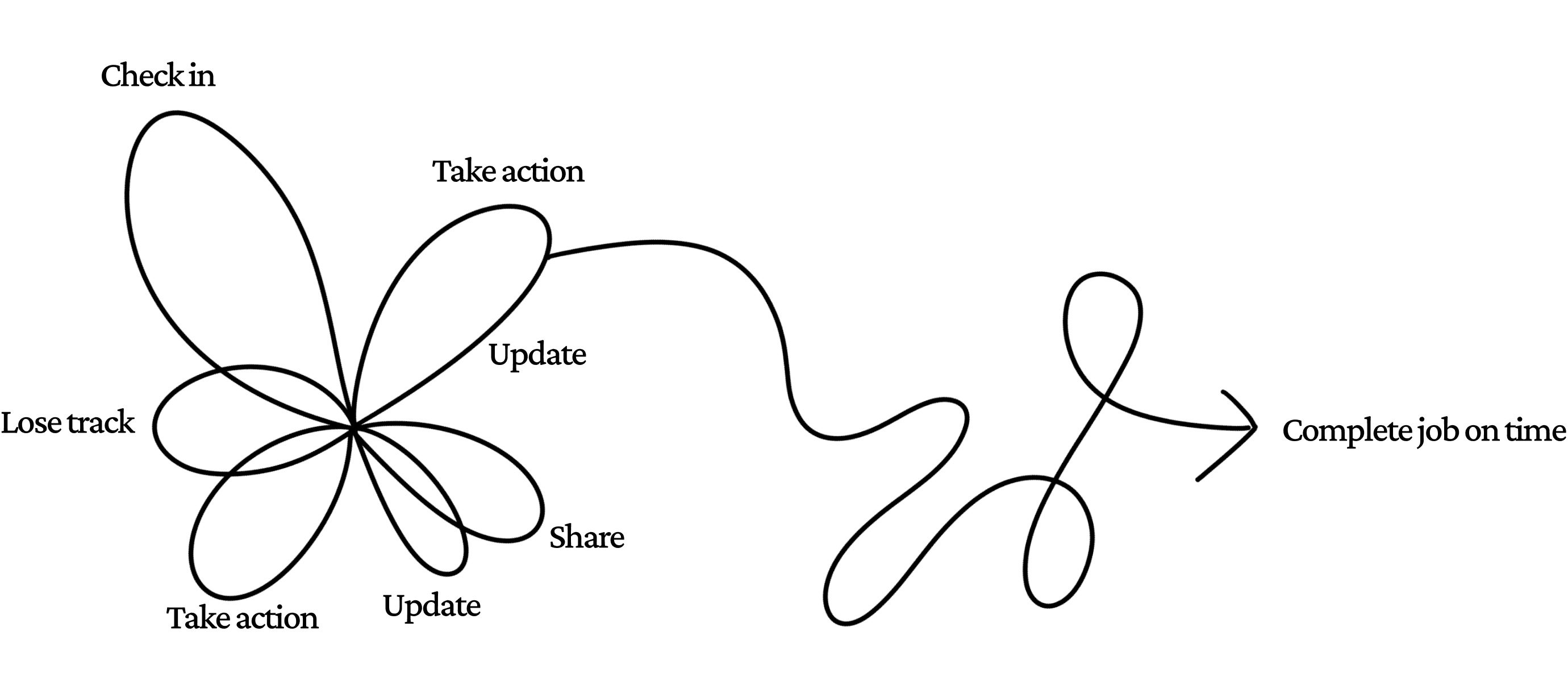
The three-pane layout gave everything the same weight.
- No clear hierarchy. People had to scan the whole page to find anything.
- Constant switching. Mixpanel data showed users moving between pages just to refer to associated details.
- Slow first days. Onboarding teams repeatedly heard customers describe the page as confusing and time-consuming.
Custom requests, such as sending job updates to HubSpot, also landed here as ad-hoc buttons and controls that broke the design language. The page needed more than a redesign for today. It needed a scalable framework.
A visual audit of cognitive load
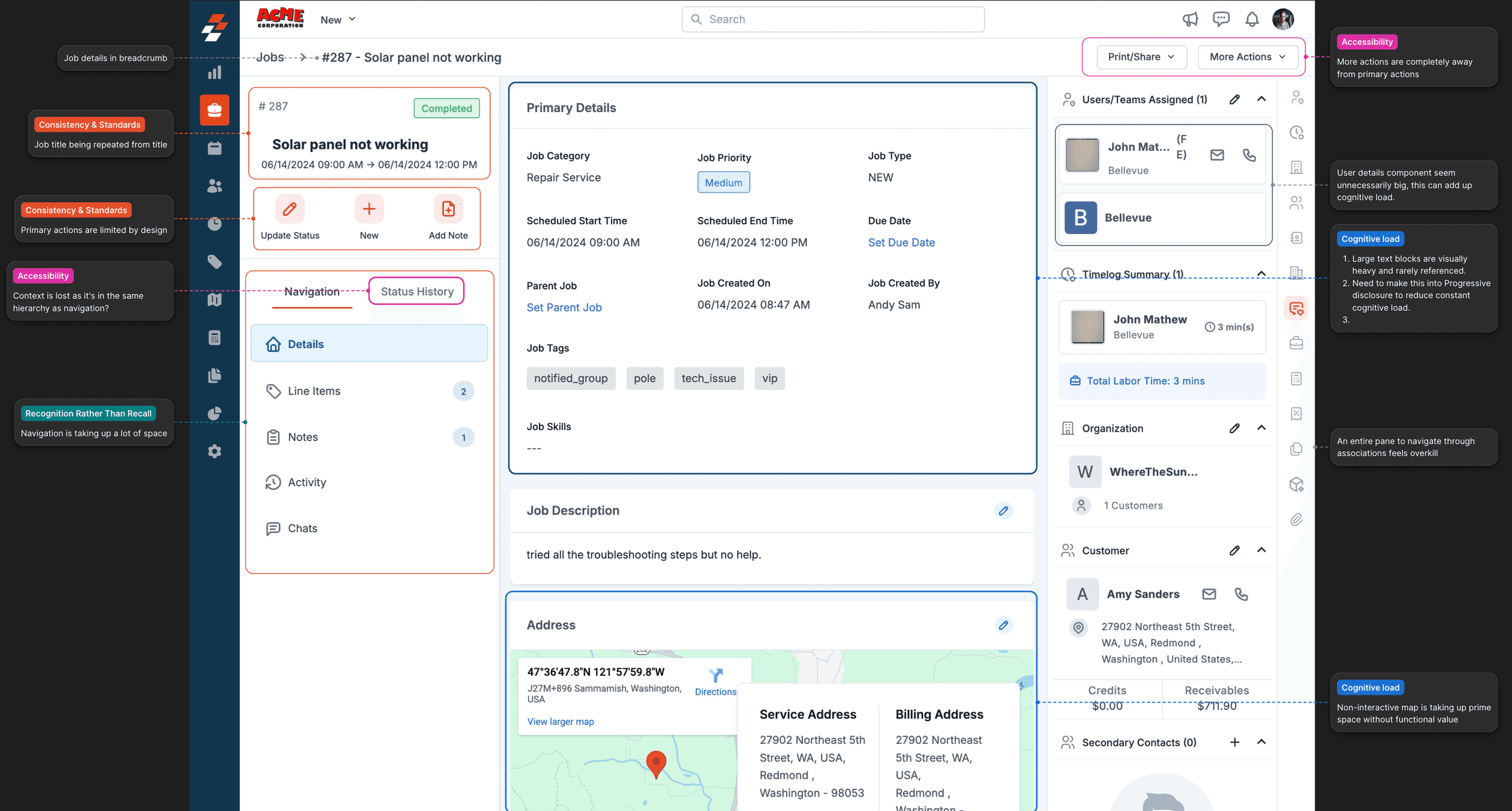
Overwhelmed
The page asked for more effort than it gave back.
Users spent extra hours each week just keeping up with their jobs. One quick glance often turned into minutes of scanning panes, tabs and buttons.
Managers and back-office users described hunting for answers to simple questions: What’s the current status? Which checklist is pending? Which service task is left? Where’s the inspection form?
Three principles
Reduce noise, surface only what’s relevant and save time, while staying intuitive, adaptive and scalable.
- 01
Cut down noise
Highlight the essentials and quiet everything else.
- 02
Drive context with hierarchy
Put context where people look, so they navigate less.
- 03
Build a framework, not a page
Leave room for new features and custom needs without adding clutter.
Information architecture
We compared layouts that arrange the same regions differently: identity and actions, activity history, associations and apps. In every option, the job itself and “What should you do next?” took the most space.
Redrawn from the project’s layout wireframes to compare them side by side.
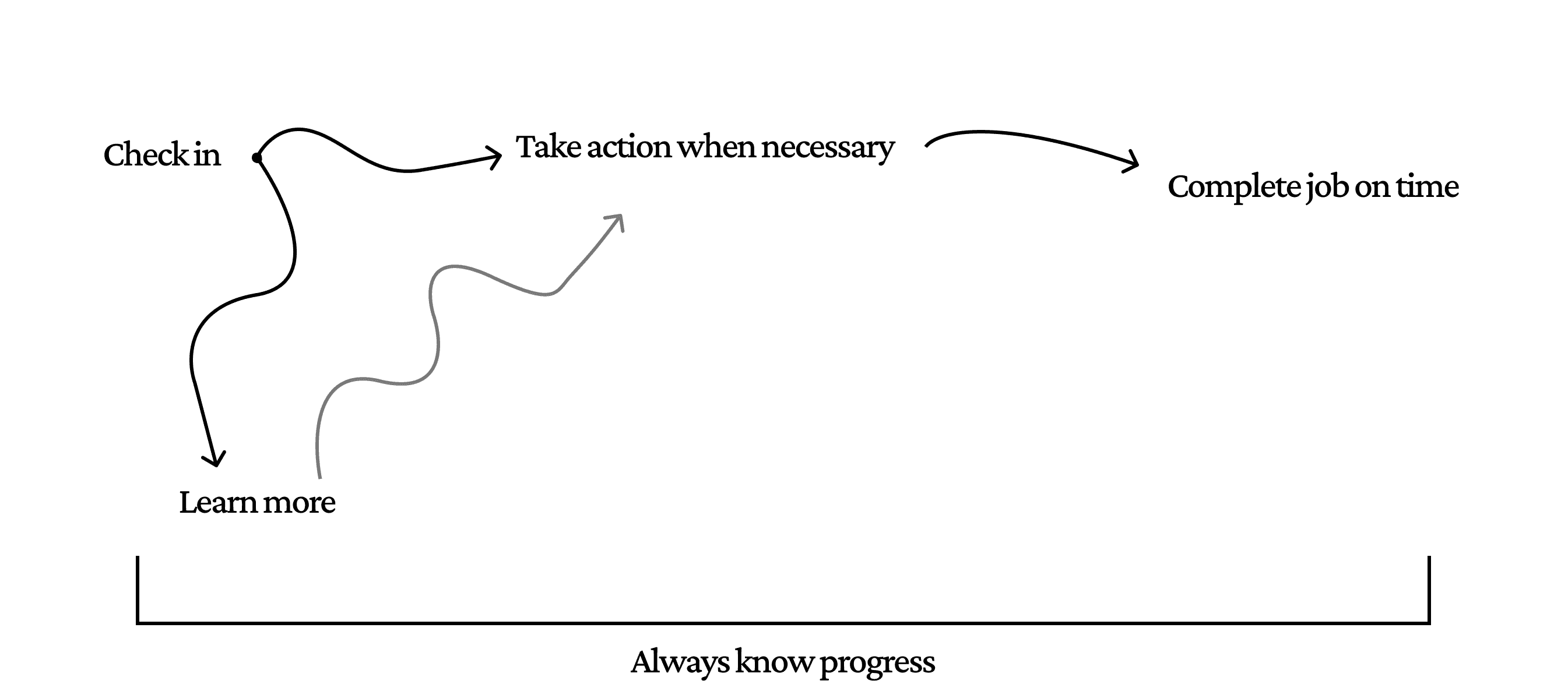
A simpler mental model
Check in, learn more only when you need to, take action, and complete the job on time, with progress visible throughout.
Prototyping
We quickly built usable prototypes in divergent directions. They gave us concrete frames of reference to validate with users and internal teams, which helped us narrow down to the most effective solution.
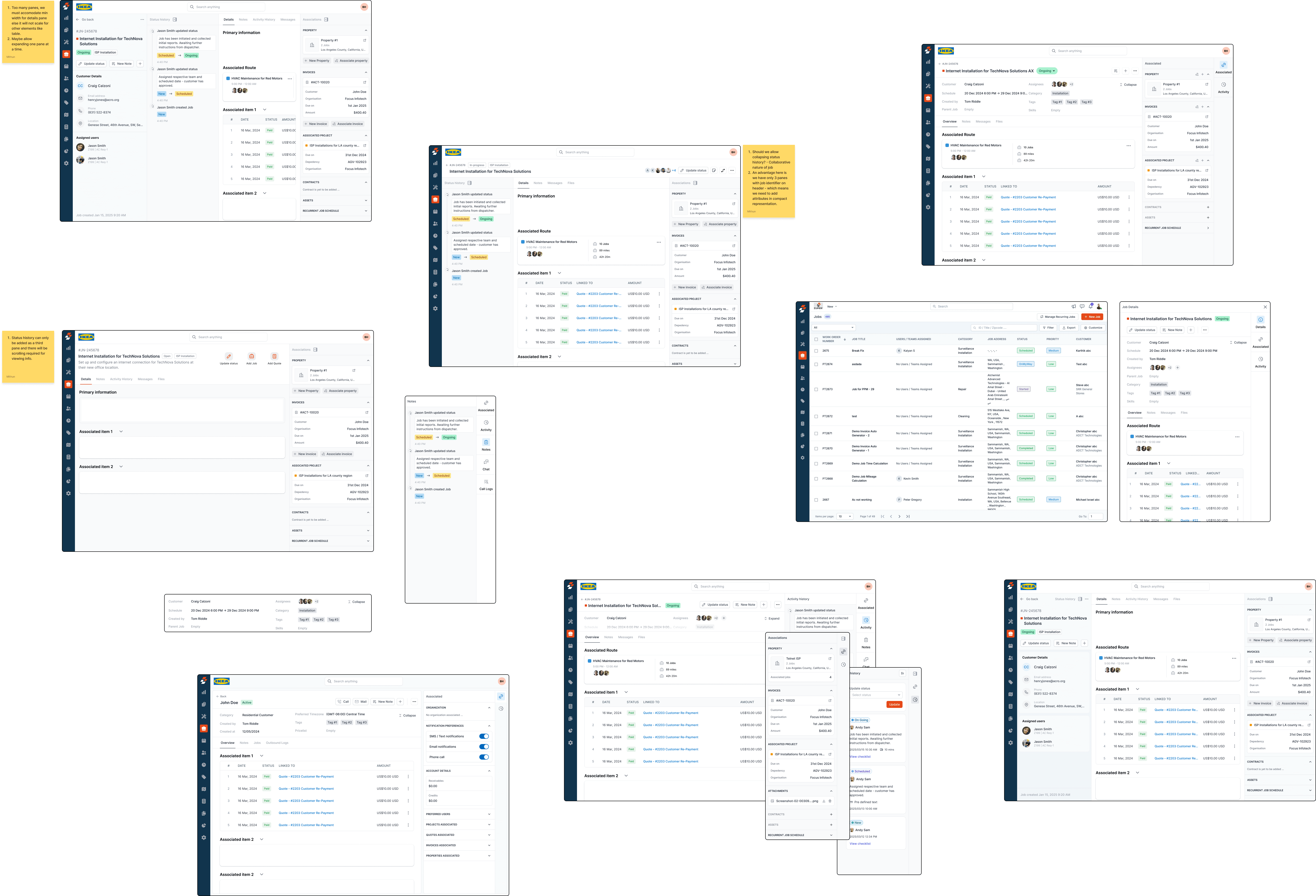 Prototype canvas
 What’s next
The result is a new Job Details framework with clearer hierarchy and room to grow. Its impact hasn’t been measured yet: next, we plan user interviews to validate it in real-world use, then adapt the framework to other modules.
Impact: validation planned, not yet measured